

Knitting Workshop
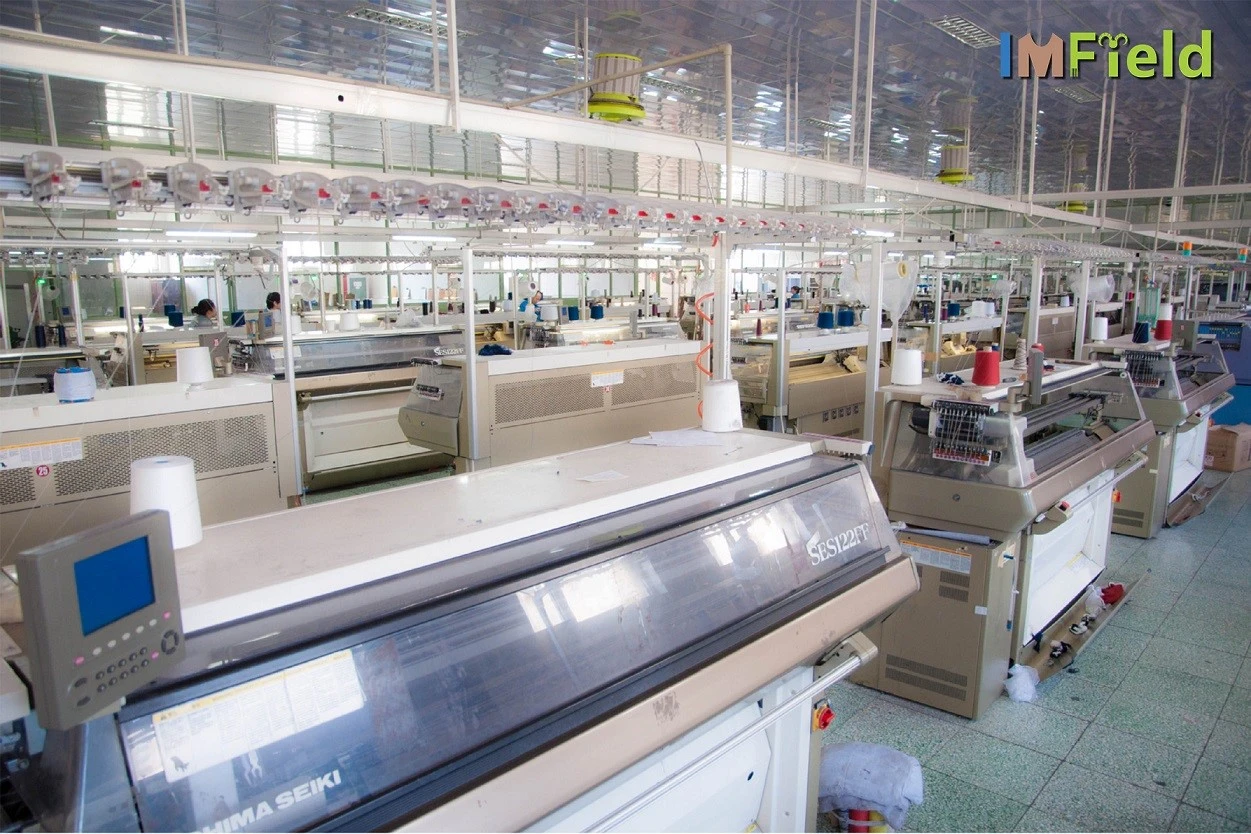
Once the yarn spinning is finished, the knitting process could be started. It's a process of forming a loop of yarn with a knitting needle and then connecting it into a knitted fabric through a string, that's how the yarn becomes to clothes. The knitted clothes is soft, has good wrinkle resistance and air permeability, greater elongation and elasticity, and it is comfortable to wear.
In 1589, the British priest William Lee, invented the first hand knitting machine. 300 years later, with the invention of electric motor in 1870's, hand knitting machine was replaced by high-speed electric knitting machine.
In 1919, first STOLL automatic all needle narrowing knitting machine with chain control came out, since then, it has opened up one century of glory for STOLL. Our factory is also adopt STOLL knitting system, its unique technical advantages help us to create perfect cashmere items.
Now, let me introduce our knitting workshop and show you the working process.
1-Knitting Panel
First of all, we knit the cashmere yarn into pieces according to the design drawings. In this process, the number of knits in each row is calculated.
The front piece, back piece, sleeve piece, etc. And it needs to be tested to get to the next step.
2-Panel inspection
After the weaving piece is off the machine, it must be inspected piece by piece to meet the requirements before entering the garment process. The contents of the clothing piece inspection include the specifications of the fabric (i.e., the length of the single piece, the length of the rib, the number of clamp rotations, the number of needle receiving, etc.), the weight of the single piece and the appearance quality, including details such as missing needles, flower needles, and unedged monofilaments. The density and specification of the fabric should be fully retracted before proceeding. However, in the process of braiding, the weaving piece is subjected to the longitudinal stretching of the threading plate, hanging hammer, etc., coupled with the tension during the braiding, so that the density and size of each part of the weaving piece after getting off the machine are quite different from the actual requirements of the finished product.Therefore, this method of natural retraction takes a long time.

3-Stitching Plate
How to link two different parts together? Stitching plate is an efficient way, this is a precise process, the number of knits of the two parts must be the same, also, the worker have to match each needle one piece with the another piece without any mistake, and finally sew the two pieces together. Front and back piece stitching, sleeve and body stitching, etc.

4-Hand Stitching
Of course, machine is not panacea, we need do hand stitching for the special parts.

5-Suture inspection
After all the fabrics and accessories are stitched, check whether there are problems such as unsightly appearance caused by uneven stitch stretching, missing needles, broken threads, uneven and dirty stitches.
This is the first inspection of cashmere products as ready-to-wear, this time because it has just been stitched, and then it is checked where there are problems, and if there are problems, they will be reworked in time.

6-Washing
Wool shrinkage belongs to the wet finishing process, which is to use the shrinkage characteristics of cashmere fiber, so that the fibers are soaked by damp heat and the scales are expanded and soft, and the surface is short under the action of friction, which makes the appearance of the product plump, and the feel is smooth and waxy, rich in elasticity.
Our whole process: pre-washing, soaking, shrinking, cleaning, softness, dehydration, drying.
Our 100% cashmere products need to be processed for 4 hours to guarantee the softness and warmth of the cashmere products.

7-Final inspection
The finished product inspection is a comprehensive inspection before the product leaves the factory. The content includes appearance quality (dimensional tolerance, appearance defects), physical indicators (weight of a single piece, density of needle rings), etc. The inspection of this process is an important step in quality control, which can effectively find whether there are defects such as holes, falling sleeves, monofilaments, thread openings, and dyeing in the laundry after washing.

8-Ironing
After washing, shrinking and drying, we use steam ironing to set the shape of the clothes, maintain the style characteristics, the appearance is flat and crisp, and the feel is comfortable. When ironing, put the cashmere product on the sample to meet the specifications.

9-Radom Inspection
In order to ensure that the products have a high quality, we also need to randomly select a part of the goods for another inspection, and if all the sampling inspections are qualified, we can carry out calibration packaging.


10-Labeling and packing
After the inspection is completed, the qualified cashmere sweater is labeled according to the requirements, hung up and folded into the packaging bag, and then put it flat into the carton.

